01 / Measure
Directional conductivity
In-plane and through-thickness thermal conductivity using dedicated configurations appropriate to anisotropic materials.

Capabilities / Thermal characterization
For anisotropic composites and heat-spreader materials, a single conductivity number can be misleading. CoolTek offers three-direction thermal-conductivity characterization with engineering interpretation and expandable research-grade scope.
Three-direction conductivity
Dedicated in-plane and through-thickness configurations allow the principal conductivity components of an orthotropic material system to be characterized separately.
Specimen geometry, number of replicates, temperature range, and achievable uncertainty are confirmed for each material and project scope.
Replicate specimens in all three principal directions, repeatability assessment, formal reporting, and uncertainty-aware comparison suitable for design inputs.
Expanded uncertainty treatment, FEA-assisted parasitic heat-loss corrections, interface studies, and publication-grade analysis where justified by the program.
Optional laminate fabrication, orientation-specific specimens, machining, or preparation can be included when the customer does not already have test-ready samples.
What the service can include
01 / Measure
In-plane and through-thickness thermal conductivity using dedicated configurations appropriate to anisotropic materials.
02 / Quantify
Multiple specimens per direction can establish repeatability and quantify specimen-to-specimen and measurement variation.
03 / Interpret
Contact effects, parasitic heat loss, interfaces, and thermal-model interpretation can be incorporated for expanded scopes.
Why multidirectional characterization matters
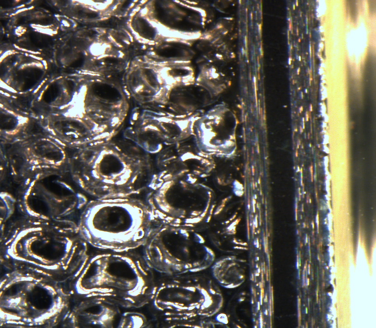
Foams, fiber orientation, resin-rich interfaces, bonded skins, and local contact conditions can create very different heat-flow behavior in plane and through thickness. That is why CoolTek's thermal service is structured around directional conductivity and engineering interpretation rather than a single nominal material number.
Image shown is research heritage from the Jung Research Group at Purdue University and is not presented as a CoolTek customer deliverable.
The service is especially relevant when a laminate is being used as a heat spreader, structural thermal path, or design input to an FEA model.
Start with the requirement
Tell us what the hardware needs to do, the operating environment, quantity, and schedule.